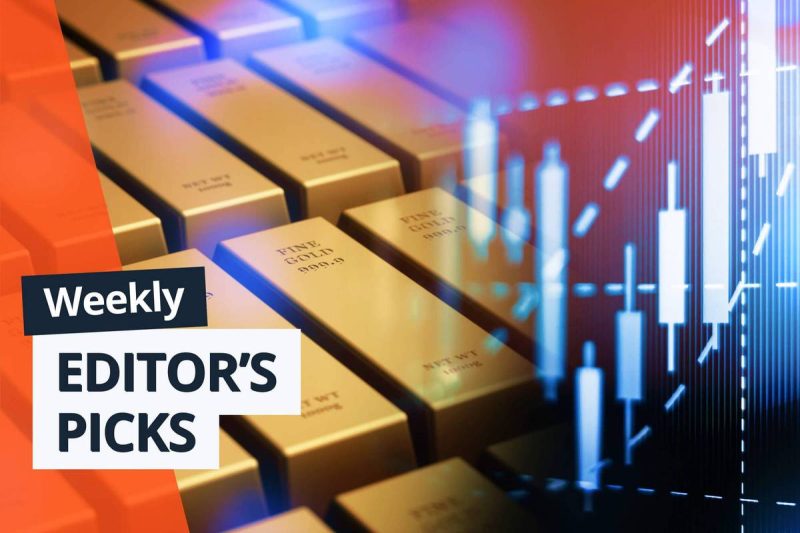
It’s been a wild couple of weeks for gold and silver.
After surging to record highs at the end of January, prices for both precious metals saw significant corrections, creating turmoil for market participants.
This week brought some relief, with gold bouncing back from its low point and even trading above US$5,000 per ounce for a brief period of time.
Silver, which is known for outperforming gold on both the upside and the downside, was more volatile, but seems to have found support around the US$70 per ounce level.
Why did gold and silver drop, and more importantly, what’s next? As always, there are a variety of different factors at play, but I’ll give you a rundown of what I’ve been hearing.
Starting with the pullback, I spoke with Joe Cavatoni of the World Gold Council, who pointed to speculative players as a key reason for gold’s price decline. Here’s how he explained it:
‘At the end of this, you’re looking at a lot of people who were pushing the price higher — speculative in nature — pulling back and taking money off the table. That’s why I think we’re seeing a correction in the price. I don’t think that we have an issue with, fundamentally, what’s going on in the gold market.’
Gary Savage of the Smart Money Tracker newsletter made a similar comment, saying that there are times when sentiment gets so bullish that eventually there’s no one left to buy.
However, on the silver side he saw signs of market manipulation as well:
‘Some of it is just (that) we got way too bullish, ran out of buyers. We were due for some kind of correction anyway, and I think the banks took advantage of that and coordinated a huge overnight attack that dropped silver … I think it was almost 30 percent, or maybe it was 30 percent, almost overnight. That allowed them to get out of their shorts, because a lot of those contracts were going to stand for delivery, and they were going to have to buy physical silver at US$120 an ounce to to deliver.’
Adding more nuance to the silver story this week was the news that billionaire Chinese trader Bian Ximing has reportedly established the largest net short position on the Shanghai Futures Exchange, with his bet against the white metal clocking in at US$300 million.
Bloomberg analysis of exchange data shows he started ‘ramping up silver shorts’ in the last week of January, although he initially began shifting from a long silver stance this past November.
Aside from silver, Bian is known for his moves in gold and copper.
There’s also been commentary suggesting that the nomination of Kevin Warsh for the US Federal Reserve chair position has weighed on gold and silver prices.
President Donald Trump announced his choice on January 30, with market watchers quickly pointing to Warsh’s hawkish reputation and questioning whether he will fall in line with Trump’s calls for lower interest rates. Rates have been a sticking point between Trump and current Fed Chair Jerome Powell.
However, in the days since the news broke, the tone has shifted, with Trump himself saying that Warsh wouldn’t have gotten the job if he said he wanted to raise rates.
Taking a step back from what’s happening now, I want to emphasize that the majority of the experts I’ve been speaking with recently don’t believe gold and silver are topping.
In a January 25 interview, Adrian Day of Adrian Day Asset Management said exactly that, pointing to previous bull markets where both metals moved steeply down before continuing up. This quote is from before last week’s correction, but I think you’ll see why it’s still relevant:
‘A pullback is always in the cards. And people forget, everybody talks about … 1974 to 1975, when gold dropped almost 50 percent. But people forget, the same thing happened in 2006. Halfway through the bull market, you had a 30 percent correction in gold, which of course means a much bigger correction for gold stocks.
‘So a pullback at some point is always not just a possibility, but it’s almost a certainty. But if we rephrase the question to, ‘Is this a top?’ You know, absolutely not. In my view, we are absolutely nowhere near a top.’
With that said, a point that’s come up repeatedly in my interviews lately is personalization — while it’s valuable to listen to other people’s views, what’s really important is to form your own opinions and understand why you own the assets in your portfolio. If you can do that, you’ll be better equipped to weather any storms, and to buy and sell when it’s time.
Securities Disclosure: I, Charlotte McLeod, hold no direct investment interest in any company mentioned in this article.